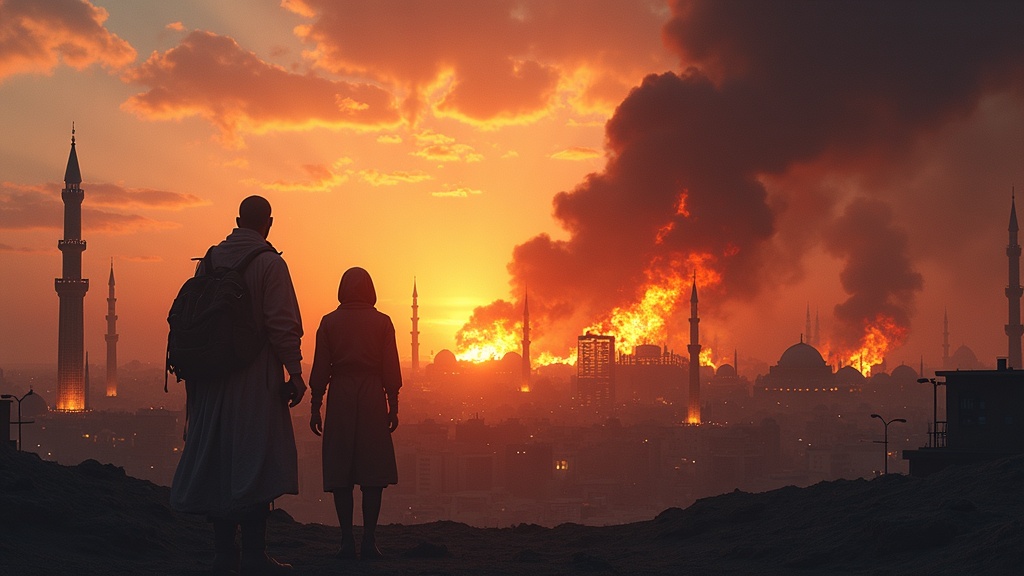
Middle East Tensions and Their Impact on Global Markets
The Middle East has long been a region of significant geopolitical tension, with various countries vying for power and influence. This instability has far-reaching consequences, affecting not only the regional economy but also global markets. As tensions escalate, investors and policymakers are closely monitoring the situation, aware of the potential for widespread economic disruption.
Economic Interdependence
The Middle East is a critical player in the global economy, with several countries in the region being major oil producers. The flow of oil from the Middle East to other parts of the world is essential for the smooth functioning of global markets. Any disruption to this supply chain can have significant economic implications, including increased oil prices, inflation, and reduced economic growth. For instance, the [global markets react to rising economic uncertainty](https://swissreporting.com/global-markets-react-to-rising-economic-uncertainty/) in the face of geopolitical tensions, highlighting the interconnectedness of the world’s economies.
Impact on Global Trade
The Middle East is also an important hub for international trade, with several strategic shipping lanes passing through the region. Tensions in the Middle East can lead to increased shipping costs, as vessels may need to take longer routes to avoid areas of conflict. This can result in higher prices for goods and commodities, affecting consumers worldwide. Furthermore, the [climate risk pushes insurance systems to the brink](https://swissreporting.com/climate-risk-pushes-insurance-systems-to-the-brink/), as the economic instability in the Middle East exacerbates the challenges posed by climate change.
Regional Instability
The ongoing conflicts in countries such as Syria, Yemen, and Libya have created a complex web of alliances and rivalries, making it challenging to predict the outcome of current tensions. The involvement of external powers, including the United States, Russia, and China, adds another layer of complexity to the situation. As the [tech giants compete to shape the next phase of artificial intelligence](https://swissreporting.com/tech-giants-compete-to-shape-the-next-phase-of-artificial-intelligence/), the geopolitical landscape of the Middle East remains a significant concern for investors and policymakers.
Global Market Reactions
In response to the rising tensions in the Middle East, global markets have become increasingly volatile. Investors are seeking safe-haven assets, such as gold and government bonds, as they attempt to mitigate the risks associated with the region’s instability. The [Europe moves to rein in AI with new digital regulations](https://swissreporting.com/europe-moves-to-rein-in-ai-with-new-digital-regulations/), demonstrating the efforts of governments to address the challenges posed by emerging technologies, while also navigating the complexities of geopolitical tensions.
Long-term Consequences
The long-term consequences of Middle East tensions on global markets are difficult to predict, but it is clear that the region’s instability will continue to have far-reaching economic implications. As the world becomes increasingly interconnected, the impact of regional conflicts on global trade and investment will only continue to grow. The [data sovereignty emerges as a strategic priority for governments](https://swissreporting.com/data-sovereignty-emerges-as-a-strategic-priority-for-governments/), highlighting the need for nations to protect their economic interests in the face of rising geopolitical tensions.
Conclusion
The Middle East tensions have significant implications for global markets, and their impact will be felt for years to come. As the region continues to experience instability and conflict, investors and policymakers must remain vigilant, monitoring the situation closely and adapting to the changing economic landscape. By understanding the complex interplay between geopolitics and economics, we can better navigate the challenges posed by the Middle East tensions and work towards a more stable and prosperous global economy. According to the International Monetary Fund (IMF), the World Bank, and the World Trade Organization (WTO), addressing the root causes of regional instability is crucial for promoting economic growth and development.