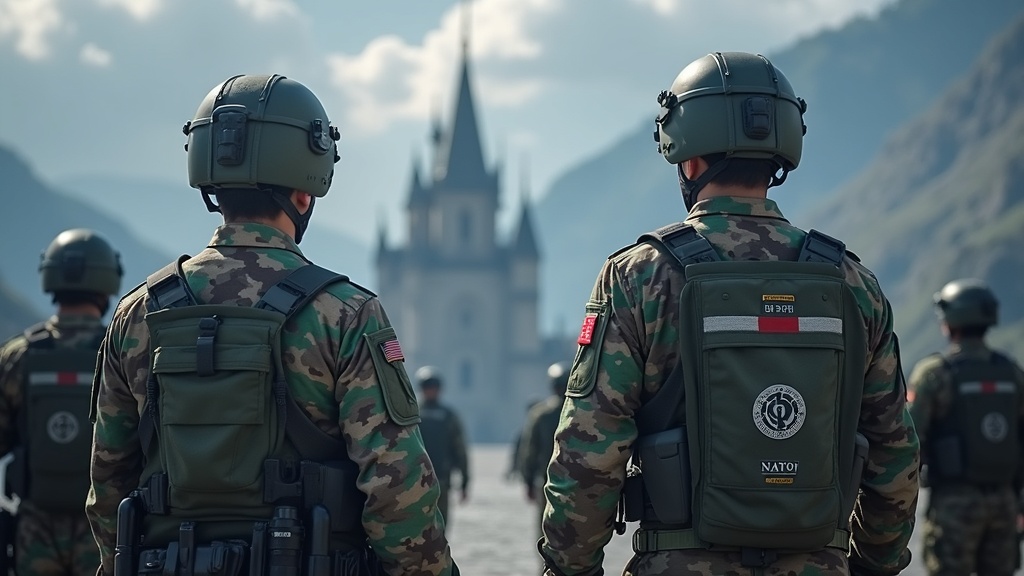
NATO Faces a More Fragmented Global Security Order
NATO, the cornerstone of Western defense, is navigating a complex and evolving global security landscape. The alliance, which has been the bedrock of stability in Europe and beyond for over seven decades, is under pressure as the world grapples with a multitude of challenges. From the resurgence of great power competition to the proliferation of non-state actors and the increasing impact of climate change, NATO’s role in maintaining global security is being tested like never before.
The Changing Nature of Global Security Challenges
The global security environment has undergone significant changes in recent years. The post-Cold War era, characterized by a relatively stable and predictable world order, has given way to a more fragmented and volatile landscape. The rise of China and Russia as major global players has reintroduced great power competition, with both nations challenging the existing international order and seeking to expand their influence. This shift has significant implications for NATO, as the alliance must adapt to counter the evolving threats posed by these emerging powers.
Great Power Competition and Its Implications
Great power competition is not a new phenomenon, but its current manifestation poses unique challenges for NATO. Both China and Russia are employing a range of tactics, from military modernization and cyber warfare to disinformation campaigns and economic coercion, to achieve their strategic objectives. This multifaceted approach requires NATO to develop a comprehensive response that goes beyond traditional military deterrence. The alliance must invest in capabilities that enhance its resilience, improve its ability to counter non-kinetic threats, and foster stronger partnerships with like-minded nations.
Pressures on the Alliance
NATO faces internal and external pressures that complicate its efforts to address the changing global security landscape. Internally, the alliance must manage the diverse interests and priorities of its member states, ensuring that collective defense commitments are upheld and that decisions reflect the shared values and goals of the alliance. Externally, NATO is confronted with an array of challenges, from the ongoing conflict in Ukraine to the instability in the Middle East and North Africa, which demand a coordinated and effective response.
The Importance of Unity and Cooperation
In the face of these challenges, the unity and cooperation among NATO member states are more crucial than ever. The alliance’s ability to present a united front against common threats and to work together in addressing global security challenges is essential for its credibility and effectiveness. This unity is not only about military capabilities but also about the shared commitment to democratic values, individual liberty, and the rule of law. As outlined in the context of [NATO’s approach to global security challenges in 2026](/nato-global-security-challenges-2026), fostering this unity and cooperation requires continuous dialogue, mutual understanding, and a willingness to adapt to evolving circumstances.
Adapting to the Future
As NATO looks to the future, it must prioritize innovation, flexibility, and strategic foresight. The alliance needs to invest in emerging technologies, enhance its cyber defenses, and develop strategies to counter the grey zone tactics employed by adversaries. Furthermore, NATO should continue to strengthen its partnerships with other nations and international organizations, recognizing that global security challenges require a collective response. For instance, understanding the implications of [why European agriculture is entering a critical phase](https://swissreporting.com/why-european-agriculture-is-entering-a-critical-phase-2/) can provide insights into the broader geopolitical and economic factors influencing global security.
Building Resilience and Partnerships
Building resilience within member states and fostering deeper partnerships with other like-minded countries are critical components of NATO’s adaptation strategy. This involves not only enhancing military capabilities but also promoting economic stability, improving cyber security, and supporting democratic institutions. By doing so, NATO can reinforce its position as a cornerstone of global stability and demonstrate its commitment to defending the principles of democracy and freedom. The alliance’s efforts to [rein in AI with new digital regulations](https://swissreporting.com/europe-moves-to-rein-in-ai-with-new-digital-regulations-2/) are a step in this direction, acknowledging the need to address the challenges posed by emerging technologies.
Conclusion
NATO faces a more fragmented global security order, characterized by great power competition, non-state actors, and evolving threats. The alliance’s ability to navigate this complex landscape will depend on its capacity to adapt, innovate, and demonstrate unity and cooperation among its member states. By prioritizing these efforts and recognizing the interconnected nature of global security challenges, NATO can reinforce its role as a guarantor of stability and security, ensuring that it remains relevant and effective in the decades to come. As the world continues to evolve, understanding the [future of money in a fragmented world](https://swissreporting.com/the-future-of-money-in-a-fragmented-world-4/) and the implications of [record numbers of displaced people redefining global priorities](https://swissreporting.com/record-numbers-of-displaced-people-redefine-global-priorities/) will be essential for developing a comprehensive approach to global security.