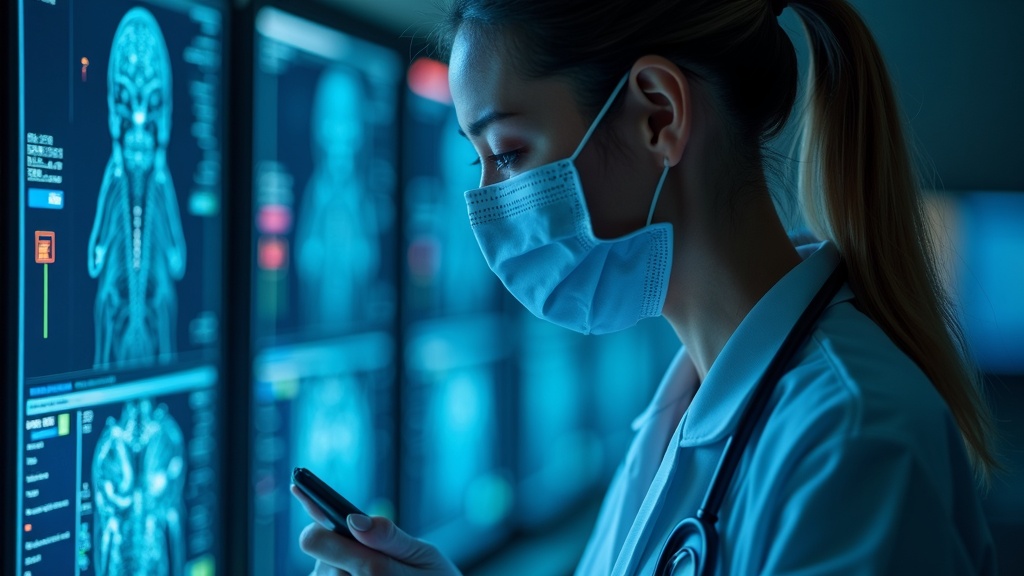
How Is AI in China Detecting Tumors Doctors Miss?
The integration of Artificial Intelligence (AI) in healthcare has been a significant area of innovation, particularly in the detection and diagnosis of diseases such as cancer. In China, AI has been increasingly used to detect tumors that doctors might miss, raising both hopes for improved healthcare outcomes and concerns about the ethical implications of relying on machine learning algorithms in medical diagnosis.
Background on AI in Medical Diagnosis
AI systems, especially those using deep learning techniques, have shown remarkable capabilities in analyzing medical images, including X-rays, CT scans, and MRIs. These systems can be trained on vast datasets of images to recognize patterns and anomalies that may indicate the presence of tumors or other abnormalities. The potential for AI to aid in the early detection of cancer is vast, given that early detection significantly improves treatment outcomes.
AI Tumor Detection in China
In China, several hospitals and research institutions have been at the forefront of developing and implementing AI systems for tumor detection. These systems have been trained on large datasets of medical images from Chinese patients, allowing them to learn the subtleties of tumor presentation in diverse patient populations. The use of AI in this context has led to the detection of tumors that were missed by human doctors, highlighting the potential of AI to improve diagnostic accuracy.
Ethical Considerations
While the potential benefits of AI in tumor detection are undeniable, there are also significant ethical considerations. One of the primary concerns is the reliability and transparency of AI decision-making processes. If an AI system detects a tumor that a doctor misses, but the diagnosis is incorrect, it could lead to unnecessary treatments or delays in appropriate care. Furthermore, there are questions about liability and accountability in cases where AI-assisted diagnoses result in adverse outcomes.
Regulatory Framework
The Chinese government has been supportive of the development and integration of AI in healthcare, recognizing its potential to address the country’s significant healthcare challenges, including a shortage of skilled doctors in rural areas. However, as AI becomes more integral to medical practice, there is a growing need for a clear regulatory framework that addresses the ethical and safety concerns associated with AI-assisted diagnosis.
International Collaboration and Standards
The development of global standards for the use of AI in medical diagnosis is crucial to ensure that these technologies are used safely and effectively worldwide. International collaboration between healthcare professionals, AI researchers, and regulatory bodies can facilitate the sharing of best practices and the establishment of common standards for AI system development, validation, and deployment.
Future Directions
The future of AI in tumor detection in China and globally is promising, with ongoing research aimed at improving the accuracy and reliability of AI systems. Integrating AI with other diagnostic tools and techniques, such as genomic analysis, could further enhance the ability to detect and treat cancer effectively. However, this integration must be accompanied by rigorous evaluation and a commitment to transparency and ethical practice to ensure that the benefits of AI are realized while minimizing its risks.
For more information on how AI is transforming healthcare, consider reading about [Why small recycling mistakes cause big problems at sorting centres](https://swissreporting.com/why-small-recycling-mistakes-cause-big-problems-at-sorting-centres/), which, although not directly related to medical innovation, highlights the broader impact of technology on societal practices. Additionally, the [Mercosur deal’s implications for Belgian agriculture](https://swissreporting.com/what-the-mercosur-deal-means-for-belgian-agriculture/) demonstrate the complex interplay between technological advancements, economic policies, and environmental considerations, all of which are relevant to the future of healthcare and AI.
As the field continues to evolve, staying informed about the latest developments and challenges in AI-assisted medical diagnosis is essential. The [UN Chief’s urging of restraint](https://swissreporting.com/un-chief-urges-restraint-as-iran-protests-intensify/) in the face of global crises also underscores the importance of responsible innovation and international cooperation in addressing the ethical dimensions of emerging technologies like AI in healthcare.