Ukraine Summit in Berlin: Europeans Consider Multinational Force
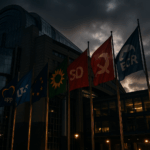
European leaders have gathered in Berlin to discuss security guarantees for Ukraine, aiming to strengthen the country’s defenses against Russian aggression. The summit, attended by high-ranking officials from various European nations, marks a significant step towards bolstering Ukraine’s position in the ongoing conflict.
Background and Objectives
The Berlin talks are focused on exploring options for a multinational force that could provide military support to Ukraine. This development comes as Ukraine continues to face significant challenges in its efforts to resist Russian advances. European leaders are seeking to reassure Ukraine of their commitment to its security and sovereignty, while also emphasizing the need for a unified response to the crisis.
Security Guarantees and Multinational Force
The idea of a multinational force is seen as a potential game-changer in the conflict, as it would demonstrate a strong collective commitment to Ukraine’s defense. European leaders are considering various models for such a force, including the possibility of a NATO-led mission or a coalition of willing countries. The discussions in Berlin are expected to lay the groundwork for further negotiations on the specifics of the force, including its composition, mandate, and operational framework.
Implications and Challenges
The deployment of a multinational force to Ukraine would have significant implications for the region and beyond. It would likely be seen as a major escalation of Western involvement in the conflict, and could potentially lead to a further deterioration in relations between Russia and the West. However, European leaders believe that the potential benefits of such a move, including enhanced security for Ukraine and a stronger deterrent against Russian aggression, outweigh the risks.
As the situation in Ukraine continues to evolve, European leaders are under pressure to deliver tangible results from the Berlin summit. The talks are being closely watched by Ukraine, which is eager to see concrete commitments from its European partners. Meanwhile, Russia is likely to view any decision to deploy a multinational force to Ukraine as a provocative move, and may respond with increased military activity in the region.
In related news, the global economy is also feeling the effects of the ongoing conflict, with trade and investment flows being impacted by the uncertainty and instability in the region. Furthermore, the technological advancements in the field of defense and security are being closely monitored, as they could potentially play a key role in the development of a multinational force.
Conclusion and Outlook
The Berlin summit marks an important milestone in European efforts to address the Ukraine crisis. As the discussions on a multinational force continue, European leaders must balance their commitment to Ukraine’s security with the need to avoid further escalating the conflict. The outcome of the talks will be closely watched by Ukraine, Russia, and the wider international community, and will have significant implications for the future of European security and cooperation. For more information on the geopolitical implications of the crisis, readers can refer to geopolitical uncertainty and its effects on global stability. Additionally, the social and political landscape of the region is also being shaped by the ongoing conflict.