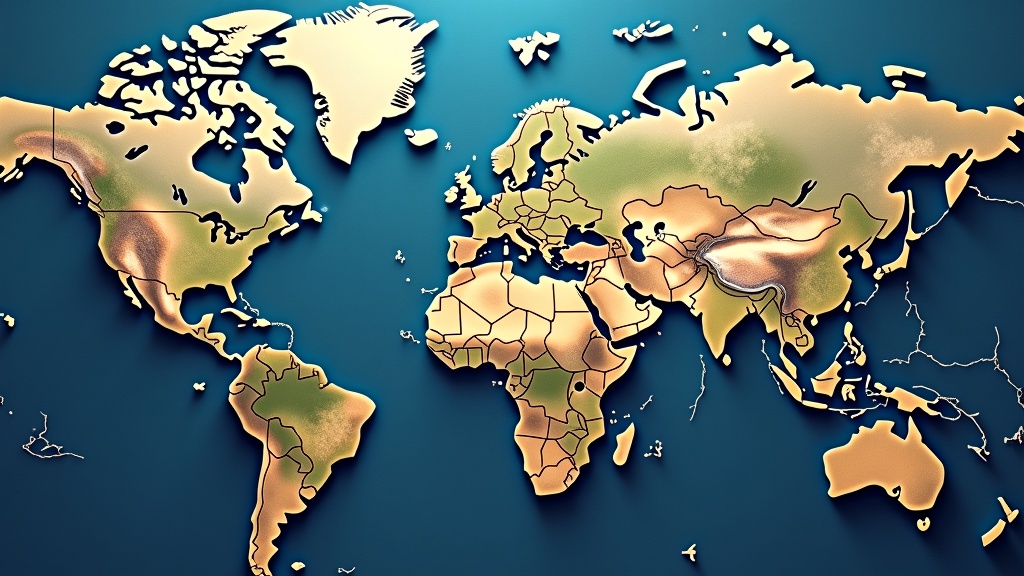
Multinationals Adapt to Fragmentation
The global economy is undergoing a significant transformation, driven by geopolitical realignment and the resulting fragmentation of international trade. Multinational corporations (MNCs) are at the forefront of this change, adapting their strategies to navigate the new landscape. In this article, we will explore the ways in which MNCs are responding to the shifting geopolitical environment and the implications of these changes for the global economy.
Geopolitical Realignment
The current geopolitical realignment is characterized by a shift towards multipolarity, with several countries and regions emerging as major economic and political powers. This has led to a fragmentation of international trade, as countries increasingly prioritize their own economic and security interests over global cooperation. The consequences of this fragmentation are far-reaching, with MNCs facing new challenges and opportunities in the process.
Impact on Multinationals
MNCs are adapting to the new geopolitical reality by diversifying their operations and supply chains. Many are shifting their focus towards emerging markets, where growth prospects are more promising than in traditional developed economies. For example, companies like Nike and Apple are investing heavily in countries like Vietnam and India, where labor costs are lower and governments are offering attractive incentives. As noted in an article on US Economy Surges in Q3 2025, the growth of emerging markets is a key driver of global economic expansion.
Regionalization of Supply Chains
Another key trend among MNCs is the regionalization of supply chains. With trade tensions and geopolitical uncertainty on the rise, companies are seeking to reduce their dependence on global supply chains and instead focus on regional networks. This approach allows them to mitigate risks associated with trade disruptions and take advantage of proximity to key markets. A report by the Global Trade Reaches 35 Trillion Milestone highlights the importance of regional trade agreements in facilitating the growth of regional supply chains.
Opportunities and Challenges
While the fragmentation of international trade presents significant challenges for MNCs, it also creates opportunities for growth and innovation. Companies that are able to adapt to the new geopolitical reality and navigate the complexities of regional trade agreements will be well-positioned to thrive in the emerging multipolar world. However, those that fail to respond effectively to these changes risk being left behind. As discussed in AI Agents Transform Supply Chains, the use of artificial intelligence and other digital technologies will be crucial in enabling MNCs to respond to the challenges and opportunities of the new geopolitical landscape.
Conclusion
The adaptation of multinationals to fragmentation is a complex and ongoing process, driven by the shifting geopolitical environment and the resulting changes in international trade. As MNCs navigate this new landscape, they will need to be agile, innovative, and responsive to the evolving needs of their customers and stakeholders. By understanding the implications of geopolitical realignment and the opportunities and challenges it presents, MNCs can position themselves for success in the emerging multipolar world. For more information on the impact of geopolitical changes on global trade, visit Multinationals and Geopolitics.