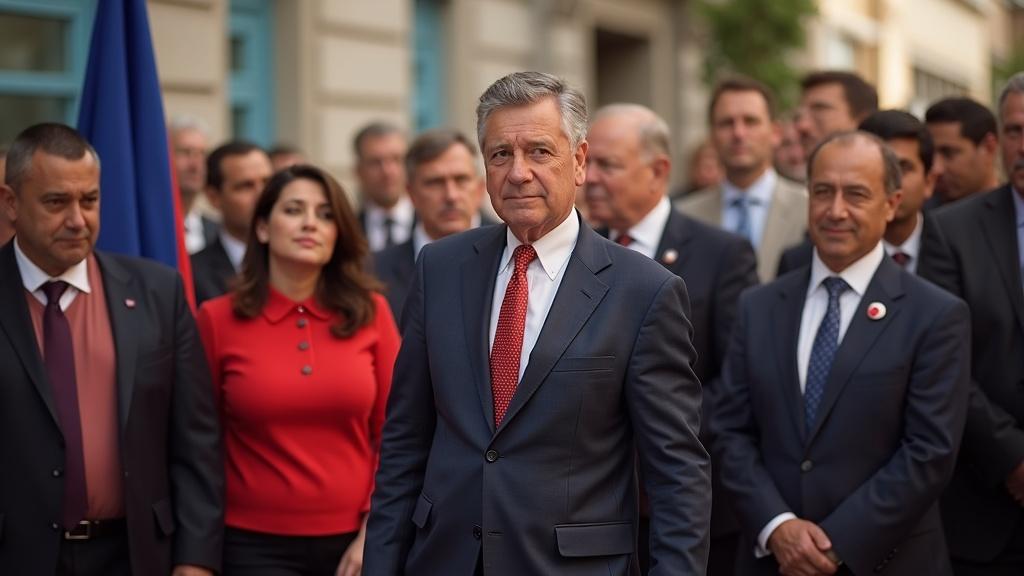
Chile election marks turning point after decades of transition
Chile’s recent election has sent shockwaves throughout the country, marking a significant turning point in its post-dictatorship evolution. Analysts are closely examining the results, which indicate a shift in the country’s political landscape. The election has brought to the forefront the complexities of Chile’s transition from a dictatorship to a democracy, a process that has spanned several decades.
A Brief History of Chile’s Transition
Chile’s transition to democracy began in the late 1980s, after the downfall of Augusto Pinochet’s military regime. The country has since made significant strides in consolidating its democratic institutions and promoting economic growth. However, the election results suggest that Chileans are now seeking a new direction, one that addresses the country’s deep-seated social and economic inequalities.
The Rise of New Political Forces
The election has seen the emergence of new political forces, which are challenging the traditional parties that have dominated Chilean politics for decades. These new forces are driven by a desire for change and a rejection of the status quo. Analysts believe that this shift is a result of the growing dissatisfaction among Chileans with the country’s economic model, which has failed to deliver adequate social welfare and economic opportunities for all.
The Role of Social Movements
Social movements have played a significant role in shaping Chile’s political landscape. The 2019 protests, which began as a response to a hike in subway fares, quickly escalated into a nationwide movement demanding greater social and economic equality. The protests marked a turning point in Chile’s history, as they brought attention to the country’s deep-seated social and economic problems. According to analysts, the election results are a reflection of the growing influence of these social movements, which are pushing for a more inclusive and equitable society.
The Challenge of Constitutional Reform
One of the key challenges facing the new government will be the implementation of constitutional reform. The current constitution, which was drafted during the Pinochet regime, has been criticized for its limitations on social and economic rights. The election has brought to the forefront the need for a new constitution, one that reflects the aspirations and values of the Chilean people. As noted by the French think tank Causeur, the constitutional reform process will require a broad-based consensus and a willingness to address the country’s historical injustices.
The International Context
Chile’s election has also been influenced by the international context. The rise of populist and nationalist movements around the world has created a sense of uncertainty and instability. In this context, Chile’s election has been seen as a test of the country’s commitment to democracy and its ability to navigate the complexities of global politics. As reported by Swiss Reporting, the global economic slowdown has also had an impact on Chile’s economy, highlighting the need for a more diversified and resilient economic model.
The Way Forward
As Chile embarks on this new chapter in its history, analysts are urging caution and pragmatism. The country faces significant challenges, including a slowing economy, rising social tensions, and a fragile political landscape. However, the election has also created opportunities for renewal and reform. As noted by experts in sustainable development, Chile has the potential to become a leader in sustainable development and energy transition, creating a more equitable and prosperous society for all its citizens.
In conclusion, Chile’s election marks a significant turning point in the country’s post-dictatorship evolution. The results reflect a desire for change and a rejection of the status quo. As Chile navigates this new landscape, it will be important for the country to address its deep-seated social and economic inequalities, while also promoting economic growth and stability. The international community will be watching closely, as Chile’s experience has the potential to provide valuable lessons for other countries undergoing similar transitions. For more information on the global economic slowdown and its impact on countries like Chile, visit Swiss Reporting’s coverage of geopolitical uncertainty.