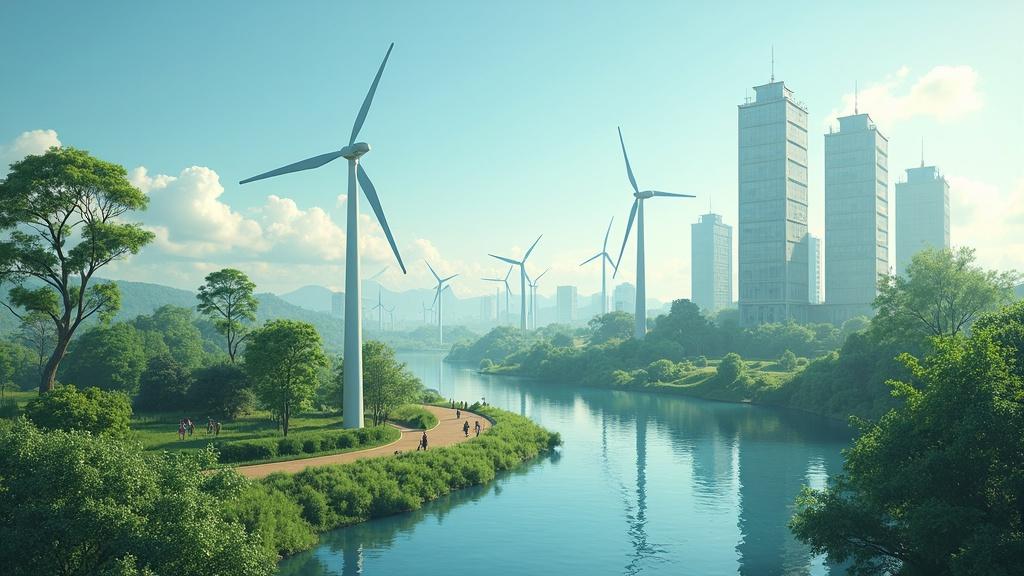
Sustainable Development and Energy Transition Shape 2025 Agenda
The world is at a critical juncture in its pursuit of sustainable development, with the energy transition at the forefront of the 2025 agenda. As governments, corporations, and individuals strive to reduce their carbon footprint and mitigate the effects of climate change, the pressure on global supply chains to adapt and evolve has never been greater. The International Energy Agency (IEA) has been a key player in shaping the energy transition narrative, and its work on [climate finance](https://www.iea.org/topics/energy-transition) and carbon markets is particularly relevant in this context.
Climate Finance: A Critical Component of the Energy Transition
Climate finance refers to the financial resources dedicated to reducing greenhouse gas emissions and mitigating the impacts of climate change. In 2025, climate finance is expected to play a critical role in driving the energy transition, with investments in renewable energy, energy efficiency, and low-carbon infrastructure projected to reach record highs. However, the IEA warns that current levels of climate finance are still insufficient to meet the goals of the Paris Agreement, and that a significant increase in investment is needed to avoid the most catastrophic effects of climate change. As the world’s leading economies continue to grapple with the challenges of climate finance, the [EU’s efforts to ease CO₂ emission rules for the car industry](https://swissreporting.com/eu-debates-easing-co%e2%82%82-emission-rules-for-car-industry/) serve as a reminder of the complexities involved in balancing economic and environmental interests.
Carbon Markets: A Key Tool for Reducing Emissions
Carbon markets are another crucial component of the energy transition, allowing companies and countries to buy and sell carbon credits and offset their emissions. The IEA sees carbon markets as a key tool for reducing emissions and driving investment in low-carbon technologies, but notes that the current market landscape is fragmented and in need of reform. As the world’s largest carbon markets continue to evolve, the importance of establishing a robust and transparent pricing mechanism for carbon cannot be overstated. The [recent developments in the EU-Mercosur agreement](https://swissreporting.com/eu-mercosur-agreement-faces-tense-vote-in-strasbourg/) highlight the challenges of integrating environmental considerations into trade policies, and the need for a coordinated approach to carbon pricing.
Just Transition: A Social and Environmental Imperative
The concept of a “just transition” refers to the need to ensure that the transition to a low-carbon economy is fair and equitable, and that the benefits and costs are shared by all. As the world’s leading economies continue to grapple with the challenges of the energy transition, the importance of a just transition cannot be overstated. The IEA notes that a just transition will require significant investment in education and training, as well as social protection programs to support workers who may be displaced by the transition. The [Swiss Senate’s recent rejection of the SVP initiative calling for strict immigration limits](https://swissreporting.com/swiss-senate-rejects-svp-initiative-calling-for-strict-immigration-limits/) serves as a reminder of the need to balance economic and social interests in the pursuit of sustainable development.
Global Supply Chains: Under Pressure to Adapt
The pressure on global supply chains to adapt to the energy transition is intense, with companies facing increasing demands from investors, consumers, and governments to reduce their carbon footprint and adopt more sustainable practices. The IEA notes that global supply chains are critical to the energy transition, and that companies must take a proactive approach to managing their supply chain risks and opportunities. As the world’s leading companies continue to navigate the complexities of the energy transition, the importance of [strengthening cybersecurity](https://swissreporting.com/switzerland-strengthens-cybersecurity-amid-global-threats/) and [rethinking water management](https://swissreporting.com/climate-extremes-push-europe-to-rethink-water-management/) cannot be overstated, and will likely play a crucial role in determining their long-term viability.
Conclusion
In conclusion, the energy transition is a complex and multifaceted challenge that will require significant investment, innovation, and cooperation to overcome. As the world’s leading economies continue to grapple with the challenges of climate finance, carbon markets, and just transition, the importance of a coordinated and sustained approach to sustainable development cannot be overstated. The IEA’s work on these issues serves as a reminder of the need for a comprehensive and integrated approach to the energy transition, and the importance of putting the needs of people and the planet at the forefront of our efforts. As we move forward into 2025 and beyond, it is clear that the energy transition will be a defining feature of the global landscape, and that the choices we make today will have far-reaching consequences for generations to come.