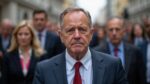
Greenland Is Not Venezuela or Iran: Theo Francken Warns Over Trump’s Threats
The recent statements by US President Donald Trump regarding the potential acquisition of Greenland have sparked a wave of reactions across the globe, with many criticizing the approach as overly aggressive and simplistic. Among those voicing their concerns is Theo Francken, a Belgian politician, who has drawn parallels between Trump’s stance on Greenland and his administration’s policies towards countries like Venezuela and Iran.
A Warning Against Simplification
Theo Francken’s warning comes as a response to what he perceives as an oversimplification of complex geopolitical issues by the Trump administration. By suggesting that Greenland could be bought or somehow acquired by the United States, Trump has, according to Francken, demonstrated a lack of understanding of the nuances involved in international relations. This criticism is not isolated, as many have pointed out that Greenland is an autonomous territory within the Kingdom of Denmark, with its own distinct culture and political status.
Concerns Over Global Stability
The Belgian politician’s concerns extend beyond the specifics of the Greenland situation, touching on broader issues of global stability and the respect for sovereignty. He argues that the Trump administration’s approach, characterized by threats and economic pressures, undermines the principles of international cooperation and diplomacy. This, Francken suggests, could have far-reaching consequences, potentially destabilizing regions and encouraging a culture of aggression over dialogue.
European Perspective
From a European perspective, the situation is watched with a mix of concern and skepticism. The idea that a country can be “bought” or coerced into changing its political allegiance or territorial status is seen as antiquated and contrary to modern principles of international law and diplomacy. The European Union, with its emphasis on cooperation, human rights, and the rule of law, stands in contrast to the transactional approach seemingly favored by the Trump administration.
Implications for International Relations
The implications of Trump’s comments on Greenland are multifaceted, reflecting not just on the future of the island but also on the state of international relations. If the world’s most powerful nation can casually discuss the acquisition of territory without considering the will of its people or the legal frameworks that govern such matters, it sets a dangerous precedent. This, according to Francken and others, could embolden similar behavior from other nations, leading to a destabilization of the global order.
A Call for Diplomacy
In the face of these challenges, there is a growing call for a return to diplomacy and a commitment to the principles of international law. Theo Francken, along with many of his European counterparts, advocates for an approach that respects the sovereignty of nations and seeks solutions through dialogue and cooperation. As the world navigates the complexities of the 21st century, the need for such an approach has never been more pressing.
For more insights into how global events are shaping local economies, consider reading about the economic signals Europe sends in early 2026 or how global oil prices are affected by geopolitical tensions. Additionally, understanding the broader implications of US foreign policy can provide context to the current situation with Greenland.